

Digital marketing is how a business gets found, chosen and contacted online. It covers your website, search results, ads, social media, email and reviews. This guide explains what each channel does, so you can pick the right place to start.
Key takeaways
- Your website comes first, because every other channel sends people there.
- SEO builds traffic over months, while ads can bring visits as soon as they go live.
- Reviews and listings build trust before people get in touch.
- Add one channel at a time, and track calls and form fills, not clicks.
What is digital marketing?
Put simply, it is any marketing that happens on a screen. A flyer on a car is traditional marketing. By contrast, a Google ad, a five-star review or a helpful blog post is digital.
The big advantage is that you can measure it. For example, you can see how many people found your site, which page they read and whether they sent a form. As a result, you can stop paying for what doesn’t work and do more of what does.
It also suits small budgets. You don’t need a TV campaign. Instead, you can start with a good website and a free Google Business Profile, then grow from there.
The main online marketing channels at a glance
In short, each channel has a different job. This table sums them up, and the sections below explain each one.
| Channel | What it does | Best when |
|---|---|---|
| Website | Turns visitors into calls and leads | Always |
| SEO | Earns unpaid Google rankings | People already search for your service |
| Google Ads | Pays for a place in search results | You need leads soon |
| Social media | Keeps followers aware of you | Your buyers use Facebook or Instagram |
| Brings past customers back | You have a list of happy clients | |
| Listings and reviews | Keeps your details correct and shows feedback | Buyers compare local options |
Start with a website that works
A website is the one channel you fully own, so build it first. After all, ads, posts and reviews all send people to it. If it is slow or confusing, every other channel wastes money.
A good site loads fast on a phone and says what you do in one line. It also makes the next step obvious, such as a short form or an email link. In addition, it needs a domain, hosting and an SSL certificate.
Cyberduck Domains, a MagniTech sister company, sells domains, WordPress hosting and SSL certificates. MagniTech builds on WordPress, and its website development packages list what each build includes. For a full plan, read how to create a high-performing website.
How SEO and paid ads work together
Search engine optimization (SEO) helps your pages rank in Google without paying per click. It takes time, because Google has to trust your site first. However, the traffic keeps coming once you rank.
Google Ads work the other way round. You pay for each click, and your ad can show up the same day. So ads are useful while SEO is still growing, or when you launch a new service.
Many local firms use both. First, ads bring leads now. Then, as rankings improve, they spend less on clicks. To learn the basics, Google’s free SEO Starter Guide is a good read.
Social media, email and reviews
Social media keeps you in front of people who already know you. For instance, regular posts show that you are active, and paid boosts can reach new people nearby. Still, few buyers hire a firm from one post, so treat it as a trust builder.
Email is the cheapest way to bring customers back. In practice, a short note with a seasonal tip or an offer can lead to repeat work. Also, it costs almost nothing to send.
Reviews and listings matter most for local services. Before people get in touch, they check your stars and your hours. That’s why your name, address and website should match on every directory, and why you should reply to every review.
How to choose your next marketing channel
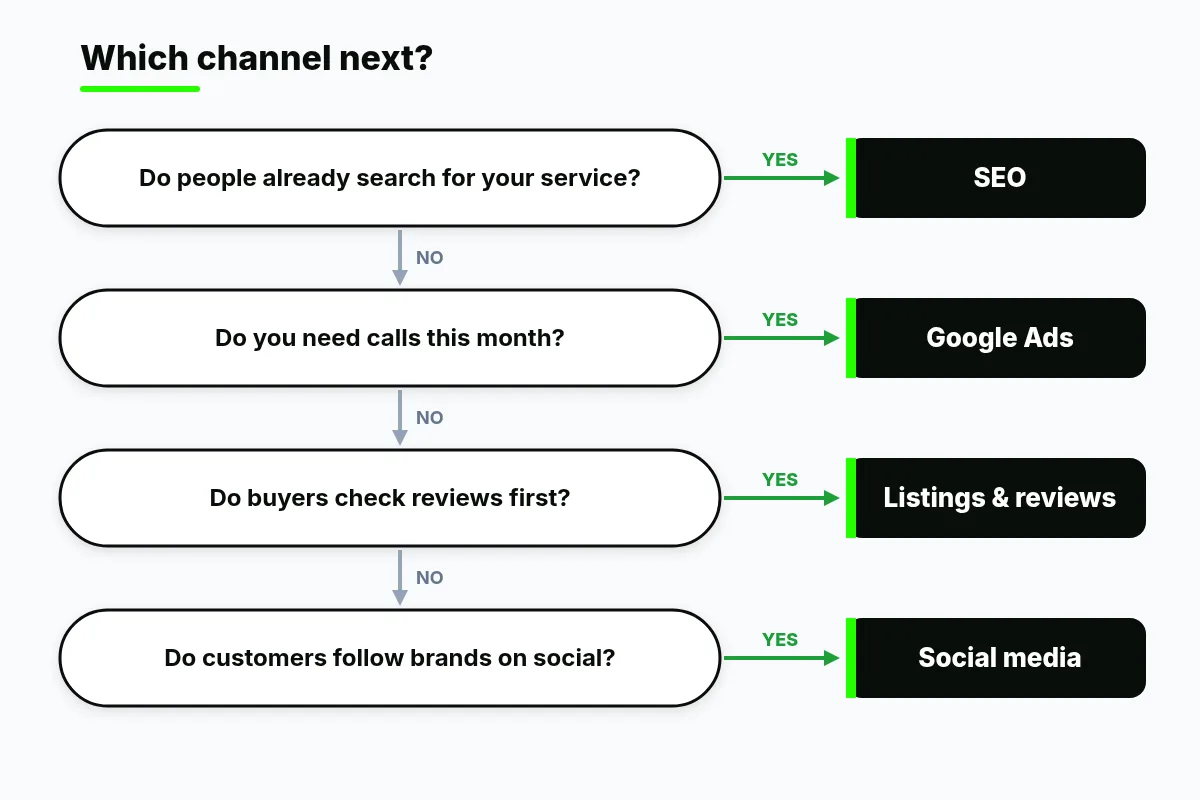
Once the site is live, ask these four questions:
- Do people already search for your service? Then look at monthly SEO plans.
- Do you need calls this month? Then a managed Google Ads campaign reaches buyers sooner.
- Do buyers check reviews first? Then fix your business listings and set up review monitoring.
- Do customers follow brands on social? Then a steady social media plan keeps you visible.
How to measure your online marketing results
Clicks and likes feel good, but they don’t pay the bills. Instead, track the actions that lead to sales: calls, form fills, emails and booked jobs.
In fact, free tools cover most of this. For example, Google Analytics shows where visitors come from. Meanwhile, Search Console shows which searches bring you up, and your Business Profile shows calls and direction requests. Check them once a month, and then move budget toward the channel that brings the most leads.
Tip: Give each channel at least three months before you judge it. SEO in particular needs time to build.
Not sure which channel fits your budget?
Schedule a free consultation call, or email [email protected] if you prefer to write.
Frequently asked questions
What services does MagniTech offer?
MagniTech builds WordPress websites and offers SEO, Google Ads and social media management. It also handles reputation and listing management, web hosting and press releases.
How much does MagniTech charge?
As of October 2026, SEO plans start at $620 a month and social media plans at $821 a month. Google Ads management is 20% of ad spend. For websites, ask for a quote.
How do I get started, and how fast is SEO?
Schedule a free consultation call or email [email protected]. Most projects are paid upfront, with payment plans available. SEO gains usually show within 3 to 6 months.
People Also Ask
What is digital marketing, and how can I do it?
It means promoting a business through search, ads, social media, email and reviews. To start, build a clear website and claim your free Google Business Profile. Then add one channel and track the results.
What are some examples of online marketing?
Common ones include ranking a page in Google, running pay-per-click ads, posting on Instagram, sending email newsletters and replying to reviews.
What are the best online marketing strategies?
The best one matches how your customers buy. For example, local service firms often start with SEO and reviews, then add paid search for faster leads.